Localization Management
The Localization Management system provides internationalization (i18n) capabilities for Nago-based applications.
It enables multilingual support by allowing both developers and users to define and manage translations for UI texts, messages, and labels.
The system is built on top of github.com/worldiety/i18n, which offers a fast, developer-centric localization API optimized for runtime translation management.
Functional areas
Localization Management provides the following core functions:
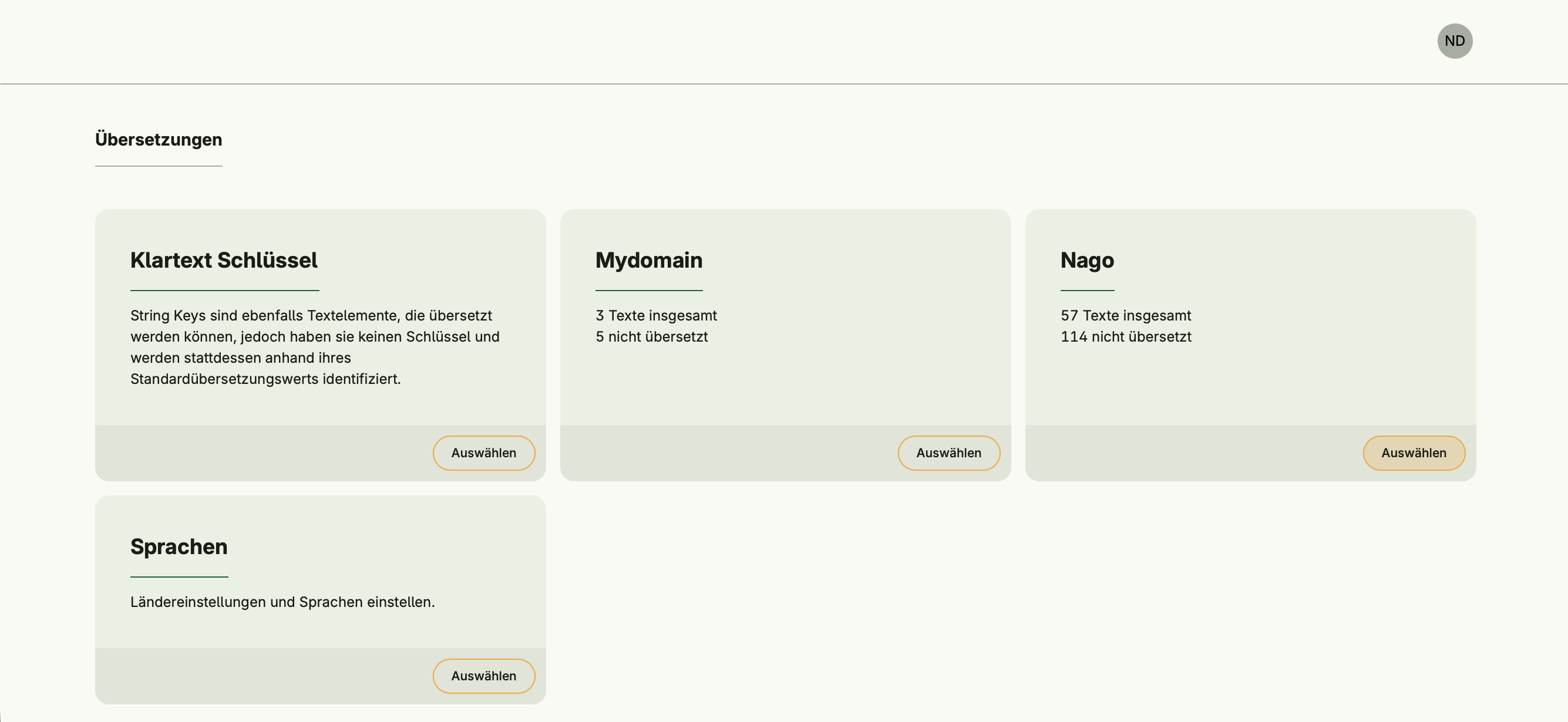
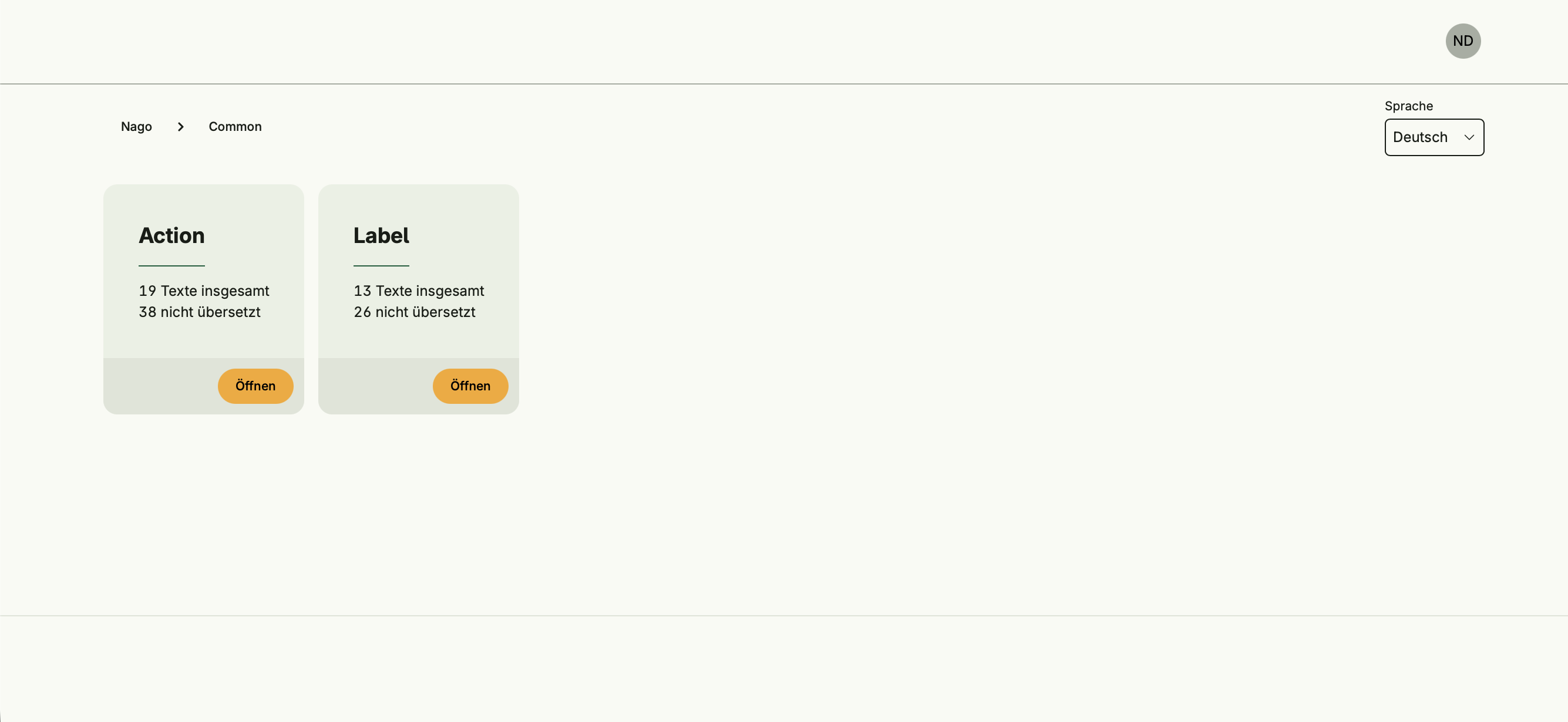
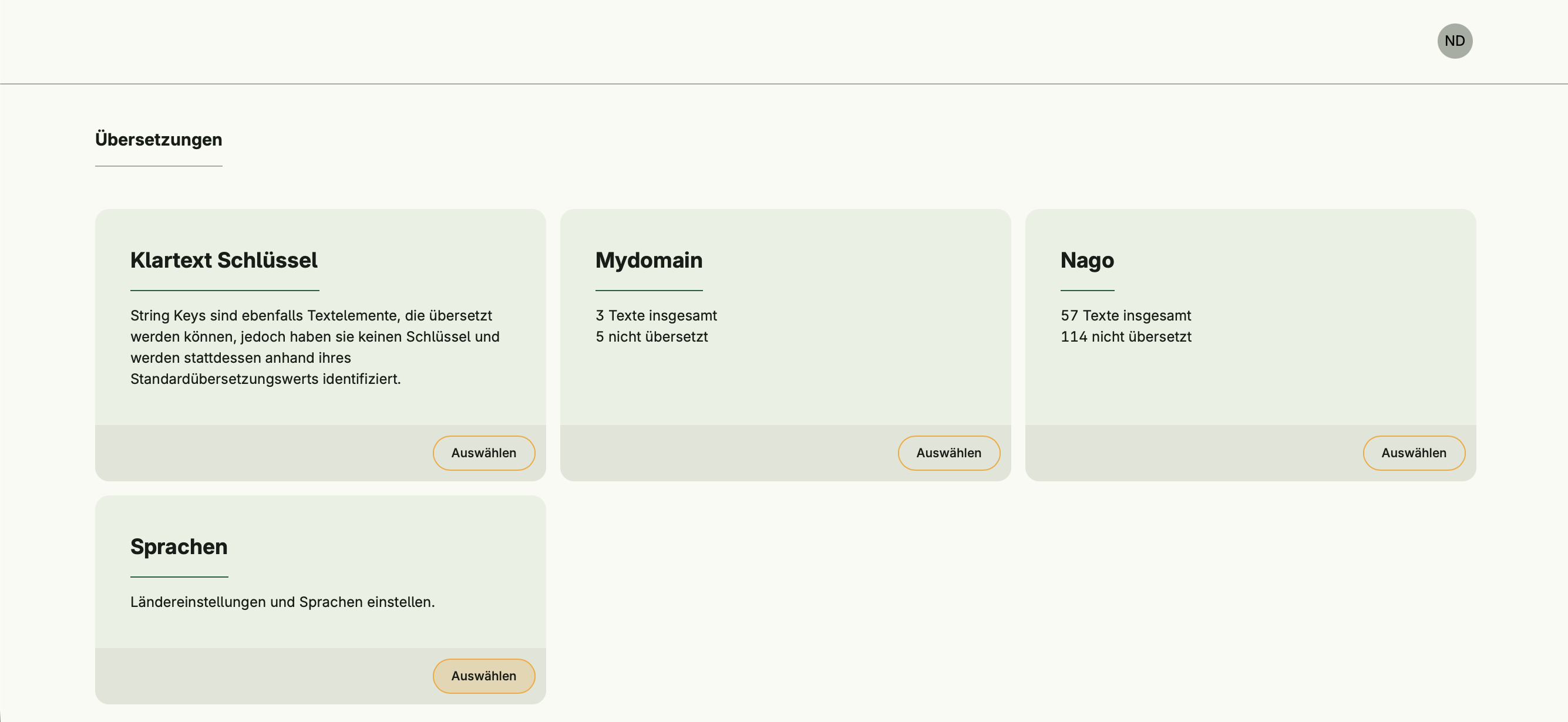
Translation directory
- View and navigate the hierarchy of translation keys based on their logical namespaces (e.g.
mydomain.example) - Overview of total and missing translations per section
- Direct access to localized message editing
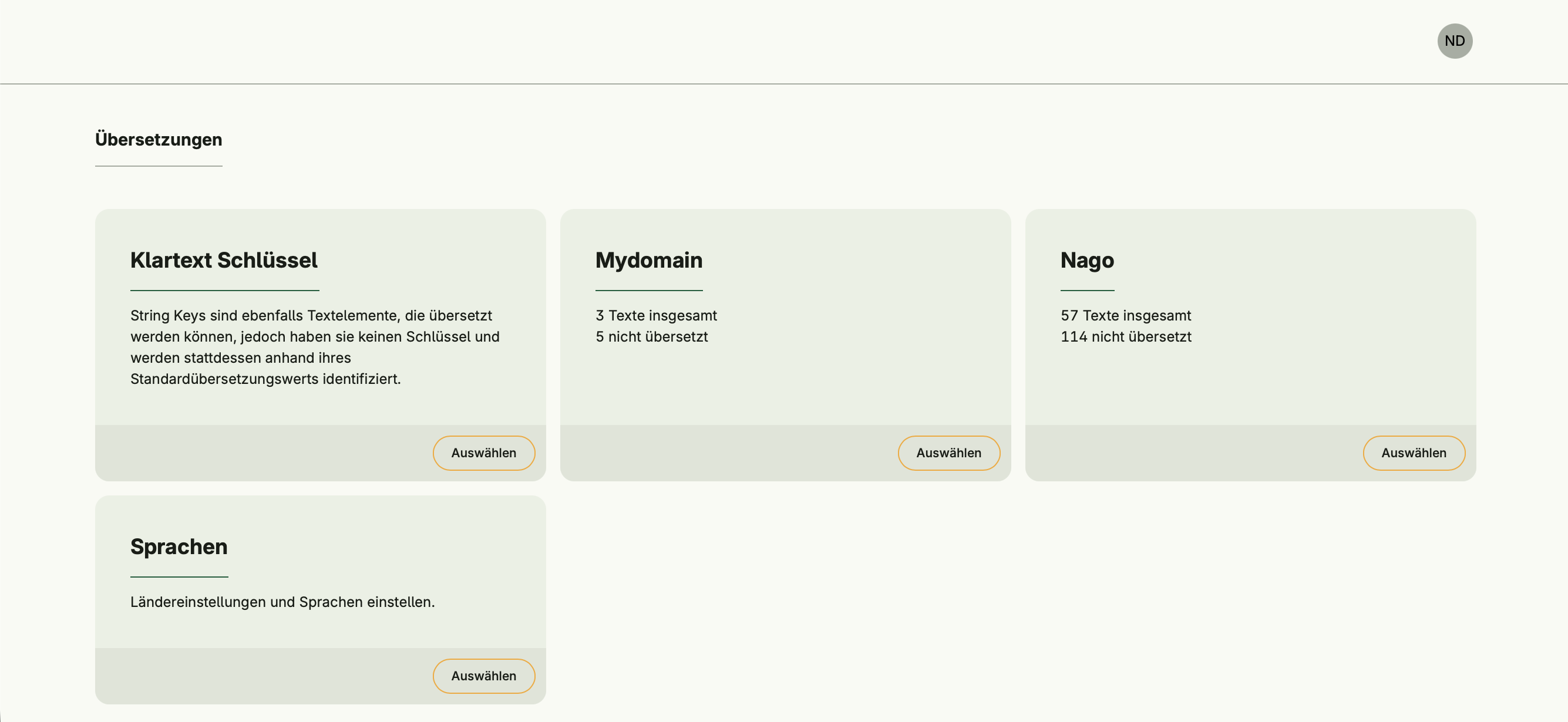
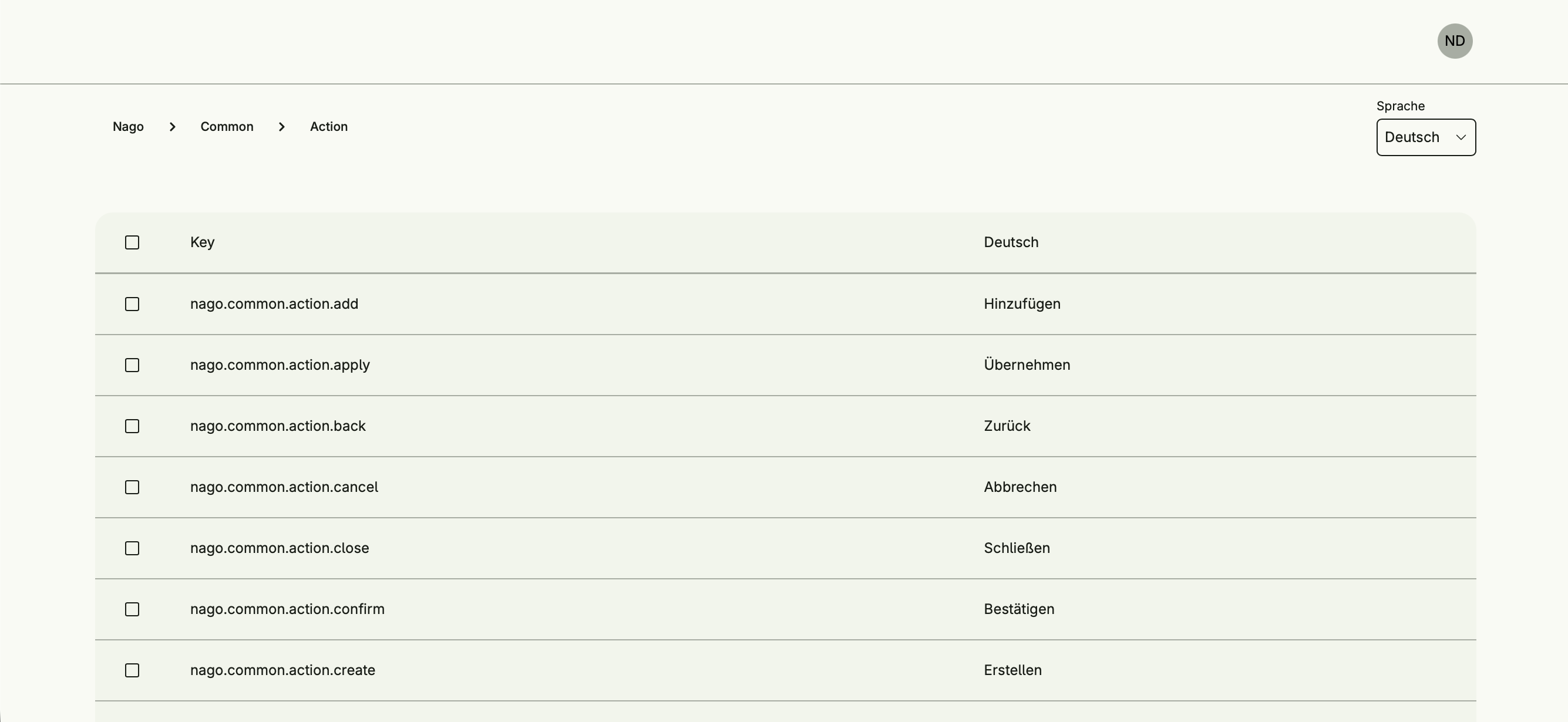
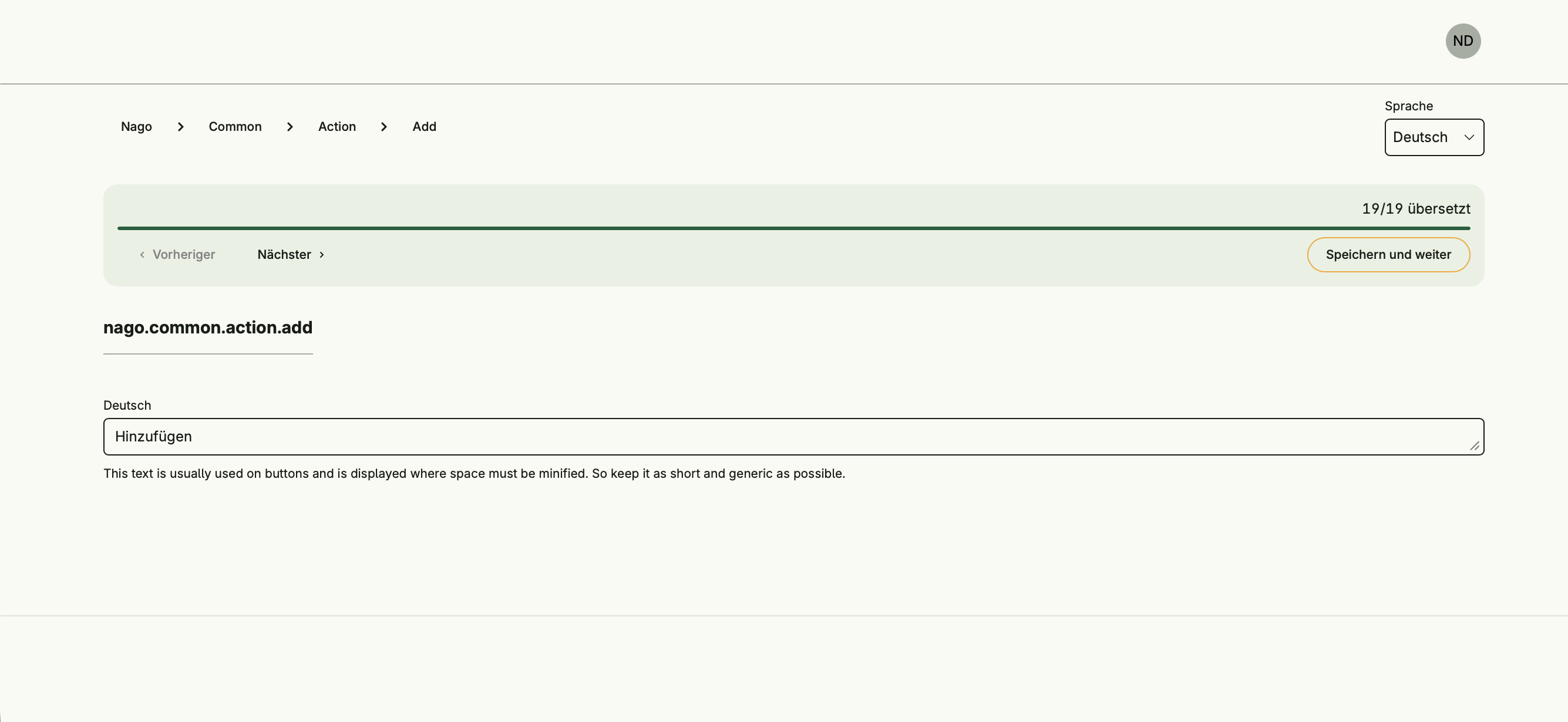
Editing translations
- View and edit translations for all supported languages directly in the Admin Center
- Update existing messages or add missing translations without redeploying the application
- Changes are stored persistently and immediately reflected in the running app
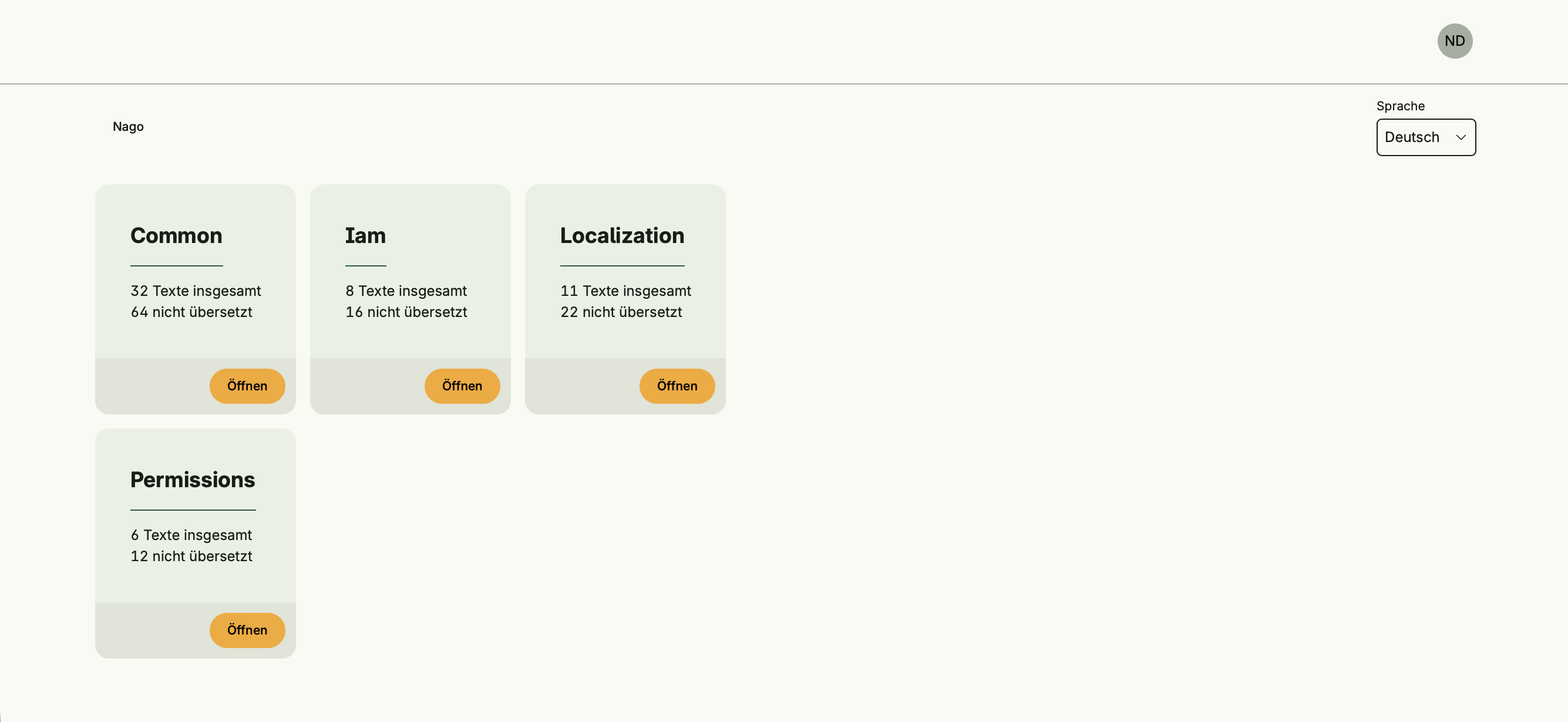
Language management
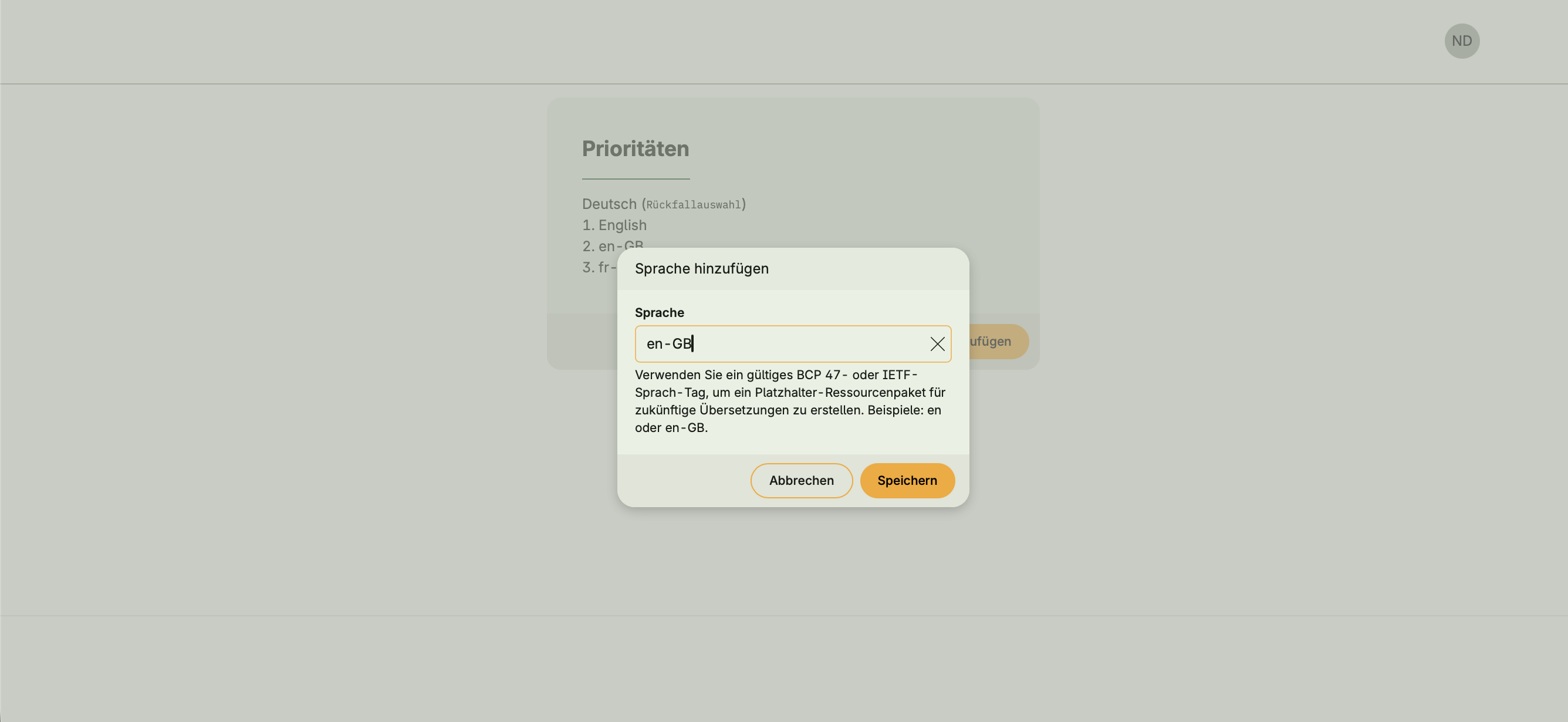
- Add new languages dynamically through the Admin Center UI
- Default languages: English and German (preloaded for all standard systems and components)
- Additional languages are added at runtime and initialized automatically in the i18n resource bundles
Developer integration
Developers define all translatable strings in Go code using the i18n API.
Example: Must String
var StrHelloWorld = i18n.MustString(
	"mydomain.example.hello_world",
	i18n.Values{
		language.English: "Hello World",
		language.German:  "Hallo Welt",
	},
)cfg.RootViewWithDecoration(".", func(wnd core.Window) core.View {
return ui.VStack(
ui.Text(StrHelloWorld.Get(wnd)),
).FullWidth()
})Example: Must Quantity String
var LabelXItems = i18n.MustQuantityString(
    "nago.common.label.x_items",
	i18n.QValues{
        language.English: i18n.Quantities{
            One:   "{x} item",
			Other: "{x} items",
		},
        language.German: i18n.Quantities{
			One:   "{x} Element",
			Other: "{x} Elemente",
		},
	},
	i18n.LocalizationHint("Shown when listing items, e.g. '3 items'"),
)cfg.RootViewWithDecoration(".", func(wnd core.Window) core.View {
return ui.VStack(
ui.Text(LabelXItems.Get(wnd, 7, i18n.String("x", "seven"))),
).FullWidth()
})- The Admin Center automatically exposes these keys for translation and correction
- Translations are cached and loaded efficiently for O(1) lookup performance
ℹ️
Localization Management is designed to empower end users to fix or extend translations directly —
reducing dependency on professional translation workflows and speeding up internationalization cycles.
Dependencies
Requires:
- None
Is required by:
- None
Activation
This system is activated via:
std.Must(cfglocalization.Enable(cfg))localizationManagement := std.Must(cfglocalization.Enable(cfg))